


Can You Really Burn Fat by Breathing? The Surprising Science Explained
- Sandra

- Jan 1
- 3 min read
It sounds like a wellness myth pulled straight from social media. “You lose fat by breathing.” But here is the twist. It is not only true, it is the primary way fat leaves your body.
Let’s break down what actually happens when you burn fat by breathing, what toxins really are, and why sweating and farting are often misunderstood in the weight loss conversation.
Fat Does Not Turn Into Energy, Sweat or Muscle
One of the biggest myths in weight loss is that fat is burned into energy, sweated out, or turned into muscle.
In reality, fat is a physical substance, made up of carbon, hydrogen and oxygen. When your body uses fat for fuel, it does not magically disappear. It has to leave the body somehow.
And here is the key point.
Over 80 percent of fat is exhaled through your lungs as carbon dioxide.
Yes, breathing.
How Fat Actually Leaves the Body
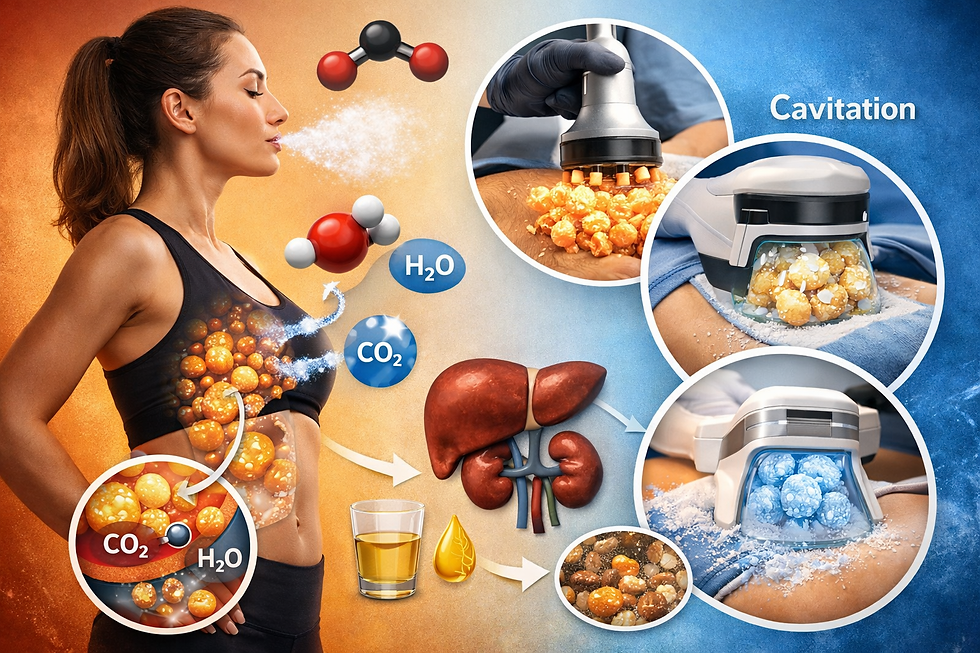
When your body needs energy, it breaks down fat molecules in a process called oxidation. This happens during everyday movement, exercise, and even while you sleep.
That fat is broken down into:
Carbon dioxide
Water
The carbon dioxide leaves your body when you breathe out.The water leaves through urine, sweat, breath vapour and other bodily fluids.
This is why breathing plays such a huge role in fat loss. Not deep breathing exercises alone, but increased respiration caused by movement and metabolism.
When you move more, your breathing rate increases.When your metabolism rises, you exhale more carbon dioxide.That carbon dioxide is literally fat leaving your body.
Why Sitting Still Does Not Burn Fat
Breathing alone does not cause fat loss. If it did, we would all be shredded during sleep.
Fat loss happens when:
Your body needs energy
Your metabolism is elevated
Stored fat is oxidised
This is why walking, strength training, HIIT, and even light activity matter. They increase oxygen demand, raise breathing rate, and accelerate the release of carbon dioxide.
You are not “burning fat into nothing”.You are breathing it out.
What About Toxins Stored in Fat?
Fat cells do store toxins. This part is true, but often exaggerated.
Fat tissue can hold:
Environmental pollutants
Hormone-disrupting chemicals
Fat-soluble toxins
When fat breaks down, these substances can be released into the bloodstream. This is one reason some people feel tired, foggy or unwell during rapid weight loss.
Your liver and kidneys then step in to neutralise and remove these toxins.
This is why hydration, fibre intake, gut health, and liver support are so important during fat loss.
Are Toxins Released Through Sweat and Farting?
This is where things get misunderstood.
Sweating
Sweat is mostly water and salt. While trace toxins may appear in sweat, sweating is not a major fat or toxin exit route.Sweating more does not equal more fat loss. It equals water loss.
Farting
This one surprises people.
Gas is a by-product of digestion and gut bacteria activity, not fat loss. You are not farting out fat. However, improved digestion and gut health can reduce bloating, inflammation, and water retention, which can make the body look leaner.
So while farting is not fat loss, a healthy gut absolutely supports metabolism and hormone balance.
Why Breathing Matters More Than You Think
You can think of your lungs as the main exit door for fat.
Every time you exhale carbon dioxide, you are removing carbon atoms that were once part of stored fat.
This is why:
Exercise works
Movement matters
Metabolic health is everything
And why quick fixes that promise fat loss without movement almost always fail long-term.
The Takeaway - Burn Fat By Breathing
Fat loss is not about sweating more, detox teas, or miracle supplements.
It is about:
Moving your body
Increasing metabolic demand
Supporting liver and gut health
Letting your lungs do their job
So yes, you really do lose fat by breathing.But only because your body earned the right to exhale it.

Comments